
By Mark W. Danielson
Lately, we’ve read some interesting ghost tales, and no doubt they are real. So in keeping with this theme, I’m adding a ghost tale and a couple of UFO stories just to keep things interesting.
The first involves a WWII pilot’s flight through The Devil’s Triangle off the Florida coast. For decades, this fabled region has been swallowing airplanes and ships, but that didn’t stop the Army Air Corps from flying C-47s (DC-3) loaded with virgin passengers through it. Capitalizing on the area’s superstition, one flight crew decided to board their plane with two pair of white gloves tucked away. At cruise altitude and just prior to reaching The Devil’s Triangle, the pilots applied sticky glue to these gloves and fastened them to their control wheels. After engaging the autopilot, they climbed from their seats and strolled to the back, much to their passengers’ dismay. One soldier nervously asked what was going on in a manner I’ll forgo. Meeting this young man’s wide-eyed gaze, the pilot calmly explained that they were now in The Devil’s Triangle so they turned the flying over to the spirits. He told him not to worry and assured him they would return to their pilot seats once they had safely exited. With no cockpit door to hinder the passengers’ view, everyone on board was now staring at Mickey’s hands steering both control wheels, certain the spirits were in control. Imagine the roar at the Officer’s Club when the pilots shared their story that night. But here’s the clincher: while I was completing Air Force water survival training in The Devil’s Triangle, the ship’s captain was the son of a pilot who’s KC-135 (Boeing 707) was lost in The Devil’s Triangle. The crew never made a Mayday call and there was no sign of any wreckage. You decide whether The Triangle is cursed.
Now onto UFOs. In the 45 years I’ve been piloting airplanes, I have never seen a UFO, but I know two pilots who have. I’ll preface this with having made numerous Atlantic crossings on indigo nights, with the Milky Way illuminating my cockpit, I realize that from space Earth is nothing more than one minuscule dot. So considering the billions of stars and countless galaxies out there, it seems ludicrous to refute alien life any more than we do spirits from other worlds.

The first incident involved a fellow instructor pilot who, at the time of the occurrence, was an Air Force F-106 fighter pilot assigned to the Air Defense Command. One day he was scrambled to intercept an unidentified flying object, meaning any airborne target that had not established proper radio communication. The supersonic F-106 was such a capable interceptor that it could probably reach Heaven if gravity never tugged on its leash. With the fighter’s radar showing the target well above his aircraft, my friend centered the target by raising the nose and in full afterburner eventually established visual contact on the shiny object. By now, his F-106 had exceeded fifty thousand feet, far in excess of what was normal for this, or any other aircraft of the day, could fly. As he closed on the object, the target suddenly shot straight up and disappeared off the fighter’s and NORAD’s radar, never to be seen again. To this day, no aircraft in the world is capable of such a maneuver; especially from that altitude.
 The second sighting involved an airline crew who, while flying the Atlantic red-eye, spotted a brightly lit craft much larger than any airliner flying next to them. Every crew member on board saw this unusual craft and reported it, but the air traffic controller saw nothing on his radar screen. The object disappeared without explanation, but later that night, reports of the same craft came from people all over Europe. In an apparent effort to protect us from panic, governments bury such events by fabricating stories that most of us buy into. If our fiction sales were as successful, we could all retire.
The beauty in these true stories is they allow mystery writers opportunities to explore unlimited dimensions and still convince their readers that it “could happen”. Ghostly reality shows are popular because on some level most of us believe there is an afterlife. UFO shows excel because many believe that aliens have visited our planet. Whether you’re using ghostly or alien themes for humor or drama, there is a wealth of related reference material in libraries and through the Internet. Ghosts and aliens never whine, complain, or shed tears, so try weaving one into your next story.
The first involves a WWII pilot’s flight through The Devil’s Triangle off the Florida coast. For
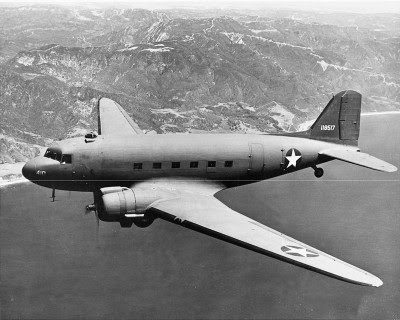 decades, this fabled region has been swallowing airplanes and ships, but that didn’t stop the Army Air Corps from flying C-47s (DC-3) loaded with virgin passengers through it. Capitalizing on the area’s superstition, one flight crew decided to board their plane with two pair of white gloves tucked away. At cruise altitude and just prior to reaching The Devil’s Triangle, the pilots applied sticky glue to these gloves and fastened them to their control wheels. After engaging the autopilot, they climbed from their seats and strolled to the back, much to their passengers’ dismay. One soldier nervously asked what was going on in a manner I’ll forgo. Meeting this young man’s wide-eyed gaze, the pilot calmly explained that they were now in The Devil’s Triangle so they turned the flying over to the spirits. He told him not to worry and assured him they would return to their pilot seats once they had safely exited. With no cockpit door to hinder the passengers’ view, everyone on board was now staring at Mickey’s hands steering both control wheels, certain the spirits were in control. Imagine the roar at the Officer’s Club when the pilots shared their story that night. But here’s the clincher: while I was completing Air Force water survival training in The Devil’s Triangle, the ship’s captain was the son of a pilot who’s KC-135 (Boeing 707) was lost in The Devil’s Triangle. The crew never made a Mayday call and there was no sign of any wreckage. You decide whether The Triangle is cursed.
Now onto UFOs. In the 45 years I’ve been piloting airplanes, I have never seen a UFO, but I know two pilots who have. I’ll preface this with having made numerous Atlantic crossings on indigo nights, with the Milky Way illuminating my cockpit, I realize that from space Earth is nothing more than one minuscule dot. So considering the billions of stars and countless galaxies out there, it seems ludicrous to refute alien life any more than we do spirits from other worlds.
The first incident involved a fellow instructor pilot who, at the time of the occurrence, was an Air Force F-106 fighter pilot assigned to the Air Defense Command. One day he was scrambled to intercept an unidentified flying object, meaning any airborne target that had not established proper radio communication. The supersonic F-106 was such a capable interceptor that it could probably reach Heaven if gravity never tugged on its leash. With the fighter’s radar showing the target well above his aircraft, my friend centered the target by raising the nose and in full afterburner eventually established visual contact on the shiny object. By now, his F-106 had exceeded fifty thousand feet, far in excess of what was normal for this, or any other aircraft of the day, could fly. As he closed on the object, the target suddenly shot straight up and disappeared off the fighter’s and NORAD’s radar, never to be seen again. To this day, no aircraft in the world is capable of such a maneuver; especially from that altitude.
 The second sighting involved an airline crew who, while flying the Atlantic red-eye, spotted a brightly lit craft much larger than any airliner flying next to them. Every crew member on board saw this unusual craft and reported it, but the air traffic controller saw nothing on his radar screen. The object disappeared without explanation, but later that night, reports of the same craft came from people all over Europe. In an apparent effort to protect us from panic, governments bury such events by fabricating stories that most of us buy into. If our fiction sales were as successful, we could all retire.
The beauty in these true stories is they allow mystery writers opportunities to explore unlimited dimensions and still convince their readers that it “could happen”. Ghostly reality shows are popular because on some level most of us believe there is an afterlife. UFO shows excel because many believe that aliens have visited our planet. Whether you’re using ghostly or alien themes for humor or drama, there is a wealth of related reference material in libraries and through the Internet. Ghosts and aliens never whine, complain, or shed tears, so try weaving one into your next story.


