Showing posts with label Mark W. Danielson. Show all posts

Sunday, May 1, 2011


May Day

May Day. Two simple words with multiple meanings. This year, May Day, or May 1st, falls on a Sunday, which is traditionally a day of rest. However, many countries will honor this Sunday with May Day demonstrations that celebrate its heritage of unrest. Of course, that doesn’t preclude people in other countries from dancing around Maypoles celebrating May Day as the official advent of spring. If you plan on writing about May Day, it behooves you to consider all of its meanings.

Since 1856, May 1st has been recognized as a day to honor labor’s struggle in establishing an eight hour work day. May 1st also commemorates the 1886 Haymarket Affair, in which during a three-day general strike in Chicago, Illinois, common laborers, artisans, merchants, and immigrants gathered in front of the McCormick Harvesting Machine Company plant. During this strike, police opened fire and killed four protestors. On the following day, an angry crowd rallied at Haymarket Square, and when things got ugly, the police moved in and opened fire on the unarmed crowd under the guise than an unknown assailant tossed a bomb at the police. By the time the bloody riot ended, at least a dozen people were dead, including one policeman. Following a sensationalized trial for the eight defendants, four anarchists were hanged. International outrage and the memory of the Haymarket martyrs led to May Day being commemorated as International Worker’s Day or Loyalty Day.

Today, May 1st is still recognized with various job actions and demonstrations, although in the US, Labor Day isn’t celebrated until the first Monday in September. Why? Because Labor Day didn’t become an official US holiday until six days after a number of workers were killed at the hands of the U.S. military and U.S. Marshals during the 1878 Pullman Strike. Placing reconciliation with the labor movement as his top political priority, President Grover Cleveland pushed a bill through Congress that created Labor Day as a national holiday. Cleveland selected the flexible September date rather than using the more widespread International Workers' Day because he was concerned that observing the latter would stir negative emotions linked to the deadly Haymarket Affair and Pullman Strike.

Socialist countries use May 1st to televise massive propaganda displays demonstrating their military might and worker solidarity. Although designed to be intimidating, these May Day celebrations are in effect a type of political protest, not unlike some of the international labor demonstrations.

Celtic and Germanic festivals celebrate May Day as the official end of the unfarmable winter in the Northern hemisphere. Budding flowers and leaves provide ample reason for raucous celebrations before the hard work of farming the fields begins. With the seeding already done, laborers often get May 1st off, allowing revelers to dance around Maypoles with colorful ribbons.

May Day has another meaning, though. When the two words are combined, you get “Mayday”; the international distress call broadcast by ship or aircraft crewmembers in imminent danger. Stemming from the French word “m’aider”, meaning “come help me”, adrenaline shoots through the veins of anyone hearing Mayday! Mayday! Mayday! on the radio.

In tactical airplanes, a Mayday call usually precedes the pilot bailing out, and that’s what I’m doing here. An upcoming move to Texas and writing deadlines preclude me from continuing writing for Make Mine Mystery. It has been a pleasure contributing to this blog and I hope it continues its reputation for excellence. I wish all of you the best in your writing endeavors. Come visit me at markwdanielson.com or Muderous Musings.

Sunday, April 17, 2011

Transitions


By Mark W. Danielson

People read books because stories offer escapes. Some prefer fantasy, others like Westerns, still others love mysteries and horror. But as different as these genre are, every novel shares the same fundamentals of writing. Words must define the story, keep them interested, and define who is speaking. Smooth transitions are of the essence, but they don’t come without experience.

Transitions occur in many ways. Commas, paragraphs, and chapters are all examples. In good writing, the reader will barely notice as they read, but bad transitions are like skunks in the middle of the road. Our job as authors is to avoid the stinkers and keep things rolling.

In writing, sentences and paragraphs may look fine as your fingers hammer the keyboard, but when you read them aloud, they don’t always flow. This is where editing comes in. Somehow, you must find a means of melting everything together so it sounds as smooth on audiotape as it reads.

As a general rule, each chapter should begin anew and end as a cliffhanger. Think of chapter endings as commercial breaks in TV shows and you’re on the right track. Give the reader a reason to come back after the break.

When you have several characters talking, it’s easy to get into the “he said, she said” mode. Sometimes it’s necessary to use the “said” word, but you can generally avoid it with description preceding paragraph that identifies who is speaking. Having that person identify who they are speaking to can eliminate another “said” word. When you think you’re finished, do a word search to see how well you did. He said, she said may be fine for children’s books, but it should be avoided in adult novels. Enough said.

Editors will agree that volumes can be written on this subject, but applying these basic principles will make yours smile.

Sunday, April 3, 2011

Deadlines Versus Dead Lines


By Mark W. Danielson


For authors, deadlines are expected. For mystery authors, dead lines are good if they kill your antagonist, or bad if they kill your story. Since we have all had our share of successes and failures in writing, this seems like a worthwhile topic to explore. Your publisher’s deadline may stir productivity, but if you haven’t prepared for it, what you turn in may be less than your best writing. Face it, authors are disciplined, but personal issues such as health, children, jobs, and whatever else we face in our daily lives can distract us from creating all that we must. I dare say that most authors, even some of the biggest in the business, have at one time or another submitted stories that weren’t ready. Perhaps they expected their editors to throw it back in their face, but in some cases, it got published as-is. Stories like this are easy to identify. They start off very well, but suddenly the pace changes, it sounds rushed, and its anticlimactic finish makes you feel cheated. I suspect the reason for this so-so novel is the author had not adequately prepared for the deadline.


The problem with turning in less-than-optimum work is the author may have fulfilled the obligation, but the sour book may not sell enough copies to pay for the advance. It doesn’t take long before books like this end up on deeply discounted displays faster than a bad big-screen movie goes to DVD. Soon after, the author can expect to be dropped by the publisher. With stakes this high, why would anyone turn in substandard work? The solution is to pace your writing. Do a few pages every day. If you skip a day, then make up for it. Allow sufficient time for the editing process. This isn’t college. You can’t cram for a novel like you would a final exam.


Stephen King’s book, On Writing, suggests that you write your manuscript straight through and hide it for weeks or months. If you can afford the time, I recommend stashing it for six months. It is amazing how different your “perfect” manuscript looks once it has fermented. During this time, clear your head by writing about something else. If you can think of this approach as a novel production line, then you’re on the right track. If you aren’t ready to begin another novel, then write short stories, blog articles—anything that will take your mind off your last project. When you revive your novel, edit it and then stash it again so you can give it a final fresh review before sending it to your professional editor. Remember that editing is an on-going process. Remember that if your editor isn’t thrilled, your book won’t go anywhere. Also remember that publishing house editors are the ones who determine whether your story is marketable. You only get one shot so your manuscript had better be perfect.


If you haven’t read On Writing, buy it. If you have a copy, re-read it while your manuscript ferments. Authors learn from each other and it’s rare when someone like Stephen King is willing to share his insight. Pace your writing, review it often, edit, let it ferment, then repeat as necessary. That’s the formula for killer submissions.

Sunday, March 20, 2011

To Outline or Not?

By Mark W. Danielson

To outline, or not is a question frequently asked at the San Francisco Writer’s Conference. The answer not only differs between authors, it depends on whether you are writing fiction or nonfiction. SF Writer's Conference speakers repeatedly emphasized that nonfiction writers must use outlines. This makes sense because their facts must be accurate, sequential, and have relevance. To properly convey a topic, nonfiction builds like a math problem. I’m no mathematician, but I do understand that X times Y equals Z. In writing, if the reader doesn’t understand the X or the Y, they will never come up with Z.

In fiction, the principles remain the same except that fiction allows more twists and turns. Because fiction writing is inventive, many authors feel an outline will stifle their creative thoughts. But then you have James Patterson, one of the best outliners in the business, who cannot work without them because he has others writing his stories for him. The more detailed an outline, the easier it is for Patterson’s co-writers to mimic his thoughts. But what about the writers who have had stories gelling in their heads for months or years, and when he/she finally sits down at the computer, their stories flow like molasses? Judging from the raised hands I saw at the SF Writer’s Conference, it seems the majority of fiction writers prefer shooting from their hips than using outlines.

The “pro” of no outlining is the freedom to write uninhibited. The “con” of no outlining is authors must go back and create their outline to ensure everything flows, makes sense, and summarizes their story for queries and book descriptions. In this regard, outlining seems inescapable. So, for the benefit of other writers, let’s take a poll. How many draft their novels using outlines, how many don’t, and why?

Sunday, March 6, 2011

Dissecting Stories


By Mark W. Danielson

Forget high school biology, this dissecting pertains to storytelling. I emphasize the word storytelling because whether a story is told over a campfire, written in prose, or sung, it remains a story, and for each story, there must be a beginning, a middle, and an end. Sure, every writer knows that, but sometimes the creative process sidetracks us. To retain audiences, our stories must be compelling, logical, and unique.

To prove my point, consider this line, “Come and listen to a story ’bout a man named Jed.” For some, grins emerge as images flash of an old TV series, but younger people are probably saying, “And?” This first line from The Beverly Hillbillies theme song is an excellent example of storytelling because of how it draws you in. Certainly, it helps that the male singer is likeable and sounds like he’s sitting across from you at a campfire, but the lyrics are what invites us to listen to his story. Since novels don’t normally have audible narration, its first words must immediately captivate the reader’s interest with the same intensity as The Beverly Hillbillies’ tune.

The middle of your story contains the key points you want your readers to know. If I was to quote the entire Hillbillies theme song, you would know that Jed was hunting, shoots his gun, his bullet goes into the ground, and up comes crude oil. This song packs a lot of information into a few words, and when combined with the visual images on screen, leaves an indelible mark. If a writer’s intent is to convey a message, then the story’s middle must express clear elements that are interesting enough to carry the story to its conclusion. In this regard, every word must count. If it doesn’t sound right when you read it aloud, then re-write until it does.

Stories end with summaries from the beginning and explanations of the middle. The Beverly Hillbillies theme song ends with the Clampets moving to Beverly Hills where neither the Clampets nor Beverly Hills is ready for their lifestyle clashes. Did this thirty second song captivate its audience and tell this story? Considering the show’s longevity and the fact that we still remember it, I’d say yes. In fact, the black and white Beverly Hillbillies sitcom is sustainable enough to be back on Retro TV. Imagine that.

I chose this theme song as an example because it still sticks with me after all these years. How many books can you name that have this same effect? For me, it’s Poe’s The Pit and the Pendulum because of the images it summons. Few books have piqued my interest that way, but that’s the difference between a classic tale and just another read.

Understanding story composition is easier than ridding a catchy theme song from your head. If you don’t believe, see how long it takes before The Beverly Hillbillies goes away. That’s the power of well-scripted words.

Sunday, February 27, 2011

Our Lost Children


By Mark W. Danielson

A missing child does not always refer to the physical sense. In fact, too many parents have lost a child and never realized it until there is a suicide attempt. In some cases, kids take others down with them before taking their own lives. It’s a tough world out there, and it’s getting tougher. With 24/7 media bombardment, I’m not sure how any child copes these days. The “lost boys” in Peter Pan and Lord of the Flies were reflections of our children decades ago. Technology has merely amplified this problem.

I’m constantly amazed at how many parents suffer from family tragedies. During a recent discussion with some fellow authors, two were sharing stories about deaths in their families. At my age, death is not uncommon, but child or young adult deaths are never expected, and always have staggering effects on family members and friends. When I mentioned that one of my children became so emotionally detached and distraught that she needed professional help, one of the other authors piped in saying that she had twice attempted suicide. Sadly, many have shared the thought. Though mental detachment is often curable, there are far too many failures.

We all have ways of dealing with loss. Some turn to religion, others join support groups, authors turn to writing. Such was the case when I wrote Diablo’s Shadow, a missing child story where the child, caught in the middle of two estranged parents, runs ahead of her father and disappears in the woods. The child’s disappearance forces her parents to work together to find her. In many cases, children hide to bring their parents together, but sometimes they simply vanish. Writing Diablo’s Shadow was my coping mechanism for what I experienced during a very dark period. It’s the most difficult story I’ve ever written and will be the only mystery I ever write on this subject.

When I meet other writers, it’s clear that our stories are driven by personal events. Where else would our characters’ passion and conflict come from? How else do we create characters that readers care about? Readers connect through their own experiences. Empathy gives our stories heart.

I frequently hear people say, “I can’t read missing children stories because I have kids.” Trust me, I understand. But stories like Diablo’s Shadow can help heal and offer guidance. Chances are good that one of your friends is or has experienced difficulty or loss with one of their children, but most bury this information so deep you will never know. The truth is you’re not alone.

How to live fulfilled lives is the greatest mystery of all. Some figure it out better than others. Parents must watch out for their children’s emotions as much as they do their children’s physical health. Kids who are withdrawing from society are at a huge risk for abuse and suicide. Be alert and bring them back before it’s too late. There are plenty of available resources to assist. A good start may be: The National Suicide Prevention Lifeline, 1-800-273-TALK (8255). www.suicidepreventionlifeline.org , and The National Center for Missing & Exploited Children, 1-800-THE-LOST (1-800-843-5678) http://www.missingkids.com/missingkids/servlet/PublicHomeServlet?LanguageCountry=en_US

Sunday, February 13, 2011

The Big Stretch


By Mark W. Danielson
Stretching the truth is normal for fiction writers, whether it’s for movies, television, or novels. Pick any TV detective show and you may find yourself cocking your head saying, “I’m enjoying the show, but how can this be?” Simply put, it is because they can.

I was assigned to Miramar Naval Air Station shortly after TOPGUN was made. Since I was in the adversary business, I met several of the pilots who flew in that movie. While discussing some of TOPGUN’s ludicrous flying scenes, the pilots defended themselves saying they kept telling the director, “That’s not how it is,” to which the director fervently replied, “We’re not making a documentary.” TOPGUN not only launched Tom Cruz’s careers, it became a top grossing movie. Had the story been accurate, it would have been boring because in real life, there is no TOPGUN competition, no trophy, and no inverted canopy-to-canopy finger waving. Just the Navy Fighter Weapons School that teachers advanced fighter tactics to a select few so they can pass the information on to their squadron mates. In the end, the director of TOPGUN found the perfect balance between accuracy and entertainment.

Another fine example of this is Dan Brown’s The Da Vinci Code. Admittedly, The Da Vinci Code isn’t one of my favorite books, but it serves as a fine example of a writer’s stretch, and Brown’s ability to convince the public (and the Catholic Church) that his fiction is actually the truth. This is the ultimate goal in writing reality-based fiction. Make it plausible enough to get the adrenaline flowing, then kick back and smile.

Think back to the shower scene in the movie Psycho. Sure, it was fiction, but the scene was real enough that people were afraid to step into their own showers. In Poe’s Pit and the Pendulum, each swing of the blade drew the reader in because they were certain someone out there might try it. The scene was a stretch on Poe’s part, yet it still reigns as one of horror fiction’s greatest.

The best thing about writing fiction is authors can create whatever they want. Gene Rodenberry faced a serious deadline in Star Trek when his shuttle models didn’t arrive in time for shooting the TV series. To solve this problem, he came up with the transporter, a means of vaporizing people and beaming them up or down from the Starship Enterprise. Although Rodenberry was the first to admit he just “made it up”, we still have scientists trying to prove or disprove it. Thus, the transporter became another successful stretch on the writer’s part.

Fiction should be fun, entertaining, and plausible, so writers should never hold back. Whether your idea makes it into the final cut is a moot point, so long as you enjoyed creating it.

Sunday, January 30, 2011

They Could Have Been Somebody


By Mark W. Danielson
One of the most important monuments to freedom lies directly behind Notre Dame at the eastern tip of the Isle de Paris. It is also one of the least visited because its location below ground level. I stumbled onto it many years ago and pay homage whenever I visit Paris. The Monument to the Martyrs of World War II is a tribute to the 160,000 French deportees Hitler enslaved and never returned. Some were part of the French resistance citizen soldiers, but most were people like you and I. The monument’s courtyard is designed to give the visitor a sense of the emptiness experienced by these prisoners with nothing visible but river and sky. Its narrow entrance leads to a single light bead in the floor representing the eternal flame. Beyond that is a crypt lined with thousands of lights that represent these martyrs. To each side is a jail cell reminding us of how these people lived. Facing them are triangular shaped urns filled with ashes from concentration camps; the remains of shattered lives that could have been.
Had Hitler been as good a tactician as he was charismatic speaker, I would probably not be alive. Either that or I’d probably be speaking German. I visit these war memorials because I owe my freedom to those who fought and died. Imagine invaders pulling you from your home and sending you to a slave camp. It happened to these civilian men, women, and children. Sadly, most who visit Notre Dame never see this memorial because they don’t know it exists. Each day, thousands of people wait to walk through this historic cathedral, but few ever cross the street out back, open the gate to the grassy park, and walk down the stairs. For those who do, one visit leaves a lasting impression.

My intent here is not to sell tickets to Paris or discuss history. It is merely an opportunity to reflect on those who never had the opportunity to write as I do. Imagine how many authors are among the ashes in those triangular urns. Think of the stories they could have told. Imagine the things they could have achieved in their lifetime. Yes, they all could have been somebody, but Hitler robbed them of that.

Freedom isn’t free. We’ve all heard that before. But most of us also take freedom for granted. Our ability to post on this web site is a classic example. I post every two weeks, rain or shine, but I also realize I can because it’s a hard-fought privilege, not a right.

Should you get to Paris, I urge you to descend those steps and spend some time in that courtyard before entering the crypt. You won’t leave without needing to write your own story.

Sunday, January 16, 2011

What's in a Name?


By Mark W. Danielson

We’ve all been warned not to judge books by their covers. The same can be said for musical groups’ names. For example, The Who is a rock band, not part of Abbot and Costello’s routine. So are XTC, The Kinks, Traffic, Black Uhuru, Nirvana, and Genesis. There are plenty of odd and unusual band names, and it’s rare when the name has any bearing on the quality of their music. Add Irish rock band Flogging Molly to the list of odd named bands that play great songs.

Last spring I was introduced to Flogging Molly, not through their music, but rather their bus idling beneath my hotel room in Tempe, Arizona. Curious, I looked out the window, saw a tour bus, watched some people step out for a smoke, climb back in, and then the bus departed. After getting dressed, I began my hike up nearby Hayden’s Butte and along the way saw a large green banner that read “Flogging Molly”. After my trek up the hill and enjoying the view, I returned to my room to check out the Flogging Molly web site (www.floggingmolly.com). Sure enough, the people I saw were Flogging Molly band mates. When I called my wife to tell her, she was so ecstatic that I checked out their tour schedule and saw that they were playing Denver. Without hesitation, I purchased two tickets.

I had no idea what to expect at the concert and literally suffered through the first two acts. Not only were they LOUD, they weren’t my style of music. With ear plugs in and hands pressed against my ears, there was still little defense against the noise powerful enough to vibrate my pants. But Flogging Molly was well worth the wait. Their musical talent is astounding, their lyrics powerful, and their stage presence exuberant. I've never seen a band pack so much energy into a single performance. Lead singer Dave King's humor intertwined with heart-pumping music at a pace fast enough to blur their hands had everyone in the audience stomping their feet. Few bands would even consider the blending banjo, accordion, and fiddle with guitars and drums, and yet they make it look effortless. No doubt these seven musicians captivate their fans wherever they go. Thanks to Flogging Molly, our musical night out was magical.

One day while browsing through Target, I spotted Flogging Molly’s Live at the Greek Theatre CD/DVD album and immediately purchased it. Without sounding like an advertisement, this is one of the finest live albums I own. The videography and sound quality in their DVD is as superb as their live performance. Including the DVD with the CD is nothing short of brilliant marketing.

So, how does this concert relate to writing? Simple. I learned some valuable lessons from my experience. First, prejudging usually proves me wrong. Character naming is as important as band naming. Staying within my comfort zone prevents me from experiencing new and wonderful things. Well-written lyrics inspire like well-written prose. Ans as for their name? Well, I you must admit that Flogging Molly sticks with you, so that’s pretty brilliant, too. Just be careful when checking out their web site and listening to their music -- you might find yourself doing an Irish jig.

Sunday, January 2, 2011

A Writer's New Year's Resolutions


By Mark W. Danielson
Never run out of paper. (It’s okay to run out of ideas.)
Never run out of ink. (It’s okay to run out of energy.)
Never throw a tantrum. (With any witnesses nearby.)
Never call tech support. (No, I really mean that.)
Never miss a blog post. (Unless in critical condition.)
Never miss a deadline. (But it’s okay not to set them.)
Never forget to jot an idea. (A note usually brings it back.)
Never fake facts. (Credibility is at stake.)
Never plagiarize another author’s words. (It’s okay being inspired by them.)
Never whine in public. (It’s okay to sip the beverage.)
Never boast of accomplishments. (People who care already know of them.)
Never speak ill of others. (One day it will haunt you.)
Never doubt your editor. (Doubts mean you have the wrong editor.)
Never send a critical document Priority Mail. (FedEx delivers the world on time.)
Never forget how lucky we are to express our ideas. (Freedom is not universal.)
Never forget to smile and love. (Frowning takes more effort.)
Happy New Year everyone!

Sunday, December 19, 2010

A FedEx Christmas


By Captain Mark W. Danielson


’Twas the week before Christmas and all through the hub,
the sorters were sorting, not one single flub.
They stuffed boxes in demis, all loaded with care,
in hopes that their pilots would soon fly them there.
The presents were nestled all snug in their cases,
while loaders slid them to all the right places.
Then my first officer walked with me to his side,
climbed the stairs to prepare for a long winter flight.
When out on the ramp I heard such a clatter,
I sprang from my seat to see what’s the matter.
Away to the door I flew like a flash,
looked out just in time to see the near crash.
The moon on the breast of new-fallen snow,
gave the luster of mid-day to the objects below.
When, what to my wondering eyes should appear,
a pilot from management not wearing flight gear.
With little old eyes, so nervous and quick,
I knew in a moment someone must have been sick.
More rapid than eagles, more pilots came.
But not enough pilots, he called us by name.
Now Dusty, now Scooter, now Gator and Oddie!
On Blazer, on Bear, on Trapper, and Hoggie!
To the top of your stairs, to the flight decks you all,
Now dash away! Dash away! Dash away all!
As dry leaves that before the wild hurricane fly,
Regardless of obstacles, we took to the sky.
From snow-covered runways, those cargo planes flew,
with cabins full of toys, and St Nicholas, too.
And then with a twinkling, my wheels soon touched down.
A few more minutes and we’ll be on the ground.
Soon a flurry of loaders converged on the plane.
And fuelers and mechanics all doing the same.
While bundles of toys rode their way down,
several safety observers all stood around.
Workers’ cheeks were like roses,
their noses like cherries.
Many in Santa hats, nearly all seemed quite merry.
Some beards were all white and covered in snow,
but no one complained, only hours to go.
One had a broad face and a little round belly,
that shook when she laughed, like a bowlful of jelly.
She was chubby and plump, a right jolly old gal,
I smiled when I saw her, in spite of myself.
A wink of her eye and a twist of her hand,
her bus door opened, I had nothing to dread.
She spoke not a word, but took us straight to the door.
As soon as we’re off, she went back to get more.
In three hours we were back in our seats,
the process done over, we’re not done with our feat.
Hundreds of planes soon took to the air,
all sure to deliver their boxes with care.
Through our smart phones, the chief pilot said,
another sort down, now go find your beds.
Merry Christmas from all who deliver your presents.

Sunday, December 5, 2010

Blast from the Past


By Mark W. Danielson


Having two out-of-print books from a defunct publisher and another publisher willing to put them on Kindle, it seemed like a good time to re-read them before sending them on. The only problem is I couldn’t find either of the final manuscript drafts. Bear in mind that these books were saved on floppy drives, and yes, I still have one computer that reads them. Then again, I also have a working 8-track stereo in the garage. (You young kids should look up “8-track player” on the Internet.) And even though I kept several floppy discs in my safe deposit box, the manuscripts I was looking for weren’t on any of them. Go figure.

So this meant I had to work from the closest versions I had. Danger Within was pretty close. The Innocent Never Knew, not as much, so it will take much longer to complete. Over a decade has slipped by since I read Danger Within, and I was pleased it is still a fast-moving and topical story that gets my heart pumping. But let’s face it, since no one huddles in phone booths or makes collect calls anymore, why not update it while checking for typos? Am I concerned about having different versions when they are e-published next year? Not in the least because e-book fans are a new audience.

My first e-publishing experience was with Diablo’s Shadow, released a month or so ago to readers preferring e-books over bound versions. But releasing out-of-print books, particularly updated versions, is a whole different animal. If the e-book versions generate new interest, then I’m happy. Whether or not they sell is a moot point because the process of recreating them was fun.

Michael Crichton once said he never re-read his work, but one day he got bored. After reading The Andromeda Strain, he remarked, “That’s pretty good.” I’m happy to say I feel the same about Danger Within, and hope to have the same feeling when I tackle The Innocent Never Knew. After all, shouldn’t good books be timeless?

Sunday, November 28, 2010

Lonely Hearts


By Mark W. Danielson

It could have been a scene from a novel. An elderly couple dining on burgers, lost in thought. Neither exchanging glances. No words being spoken. When the man finished, he put his frosty to his mouth like an ice cream cone, his spoon in hand an unused accessory, slurping as he turned it while his wife forked her baked potato. Soon, the man gathered his trash, dumped it in the bin, and walked out to the car. But rather than follow, she remained behind, casually spooning her frosty, occasionally looking out the window, no doubt contemplating her marriage that died many years ago. Cruelly, Kerry Underwood’s song about how love, compared to everything else, seems small, played in the background.

Watching this scene play out from six feet away, I thought about past relationships. Lonely hearts of days gone by. There is noting worse than feeling alone while your mate is right there with you. And yet couples like this routinely stay together, for worse, not for better. In the case above, the old woman was still inside when I drove off; her husband still slurping his frosty in the car.

Encounters like this inspire heartfelt characters. Readers empathize because at one time or another, they have been there themselves. Well-written characters can launch readers into the past, or send them into the future. But to write about love, one must first experience it. To write about kids, one must first have them. Love and kids both create a range of emotion that would otherwise be impossible to describe.

As I watched this couple, my heart went out to them, and I thanked God I have a wife that loves and stands by me. Having seen both sides of the spectrum, I'll choose love over solidarity every time.

They say that writers are loners, and in part that’s true. A writer does not write well with constant interruptions or distractions. But soulless writers cannot write at all. They must still get out and live. This holiday season, don't sweat out your deadlines. Instead, get out, smile, share your love, and enjoy the company of your friends and family.

Sunday, November 14, 2010

Giving Something Back


By Mark W. Danielson

Recently, two elementary school teachers told me how their students love to write mysteries. I could hardly believe it. At a time when so many young people prefer texting or listening to I-tunes rather than engage in conversation, to hear that students were interested in developing their creative side was heartwarming. But what makes this even more intriguing is these future writers are third and fourth graders. If their interest in writing can be ignited now, these kids will excel at anything. Stifle it and they will cross over to technology's Dark Side before they reach middle school. As a writer, they asked if I would speak to their students. I gladly accepted.
In addressing elementary school kids, I’ve learned that to be effective, I must hold their attention and keep them involved. I do this by first explaining that story writing is no different from story telling. Too much thought spoils creativity. I then lead the class through a story exercise where ideas flow while the teacher writes them on the white board. Soon, hands reach for the sky from kids eager to share their thoughts. Once we have agreed on the story’s premise, I solicit ideas for the beginning. After a good line is created, we move quickly to complete six or seven more that describe the story, and then wrap it up with a conclusion. Because kids are visual people, drawing the story in picture form can stir their creativity. Any extra class time can be spent on editing and teaching the value of words.

A week or so after my class session, I usually receive an envelope filled with hand-crafted thank you notes. Although these kids were required to make them, some notes show genuine creativity and honesty. The kids who made these are the ones most likely to develop a passion for reading and writing. Few things are more rewarding than influencing kids toward writing.

Kids need role models, and authors fit that category. Each year at Irvine, California's Men of Mystery event, four high school students from Orange County schools are recognized for their outstanding creative writing abilities. During their acceptance speeches, many refer to a single teacher or author who sparked their interest in writing. That’s pretty powerful stuff. Imagine how much better off we would be if every published author reached just one child.

I strongly encourage authors to make guest appearances at schools. Kids need to understand that race, religion, economic status, or physical conditions can never limit their creative writing. They should also know that writing isn’t about book sales, but rather the fulfillment of ideas. If you have been successful in writing, then try giving something back. You can’t reach every student, but the ones you do will never forget your name.

Sunday, November 7, 2010

It Was Bound to Happen


By Mark W. Danielson

Recently, a bomb was discovered on a cargo plane bound for Chicago. Whether this bomb was intended to explode en route or at its Jewish destination is a moot point. Either way, this scenario was inevitable.

Many years ago, I wrote about a similar situation in my fictional thriller Danger Within. As a cargo pilot, this story stemmed from my cargo safety concerns following an actual in-flight fire aboard a FedEx DC-10 caused by undeclared hazardous material. Later in my story, a bomb sends another cargo jet into the ocean. And when divers fin their way down to investigate, men die. No one expected it was a time bomb. Danger Within is a wild ride, but also a realistic one. And while cargo screening has improved since this book was published, our system still has holes. No doubt, security authorities are seeking ways to plug them.

But there is another problem associated with this failed bombing. Fear. Of course, fear is to be expected. Who wouldn’t be concerned about falling debris from blown-up airplanes? But the reality is the odds still favor an airplane’s safe arrival over your journey home from the airport. After climbing into your vehicle, you will now face texting drivers, drunk drivers, angry drivers, smoking drivers, drivers applying makeup or shaving, car jacking, and even snipers, and yet we accept these risks without a fleeting thought because we expect auto accidents. Fear is only effective if the outcome was unexpected. The objective of terrorism is for fear to override logic. That’s the terror behind terrorism. I’m not a fatalist, but I do believe that when my time is up, there won’t be a thing I can do about it. I also know that if I truly considered what might be in the 180,000 pounds of cargo I’m supposed to fly back from overseas, I would never climb into the cockpit and start the engines.

Sadly, the people responsible for this latest bomb event “won” even though their bomb never exploded. In fact, because it didn’t explode, this story will receive more attention than it would have had the cargo plane exploded and been lost at sea. The recent UPS Boeing 747 crash in Dubai from an in-flight fire confirmed that killing a couple of cargo pilots was barely newsworthy, and yet the fear of airliners carrying in-flight bombs will last for weeks. Even worse, the government now has to divert millions of dollars earmarked for other projects to further enhance cargo screening.

Writers are influenced by events, but can also influence events. I stopped writing one terrorism book because it contained too much sensitive information, and I don’t need to create scenarios for those willing to harm us. On the other hand, it’s important to keep everything in perspective as we live our lives. We haven’t gone back to the Dark Ages yet. Keeping our eyes open, our heads on a swivel, and our fear in check will ensure we never get there.

Saturday, October 23, 2010

War Isn't Over!

By Mark W. Danielson

John Lennon would have turned 70 this month. As a Beatle, he was an international celebrity. As a peace activist, he was feared by the United States government. Interestingly, neither could have occurred without Lennon’s lifelong penchant for speaking his mind and standing by his beliefs.
In the late 1960s and early 70s, John used his celebrity status and musical talents to rally young people against the Vietnam War. The British pop singer’s ability to do this became a serious concern for the Nixon administration. They tailed him, tapped his phone, and spent millions of dollars trying to deport him. Once Nixon was reelected, their interest in the singer faded, but the bullet that claimed Lennon’s life in 1980 never stopped his message that peace was possible. All of this is documented in the movie, The US versus John Lennon. While watching it, I found some startling parallels to our current international affairs.

Not unlike our situation in Afghanistan, our involvement in Vietnam began slowly. Although the US already had military advisors in Vietnam when President Kennedy took office, Kennedy’s official policy was that the South Vietnamese forces must ultimately defeat their Communist aggressors. Kennedy was firmly against deploying American combat troops in Vietnam, and stated that, "to introduce U.S. forces in large numbers there today, while it might have an initially favorable military impact, would almost certainly lead to adverse political and, in the long run, adverse military consequences.” Following Kennedy’s assasination, President Johnson took the opposite tactic by escalating the number of US troops in Vietnam from 16,000 in 1963 to 553,000 by 1968, and still the war went on. It’s interesting to note that 40% of the US casualties occurred after Nixon was elected in 1968.

Our ongoing war in Afghanistan can be traced back to the US military advisors that were sent to aid the Taliban during the Russian occupation. Long after these advisors left, and in response to the September 11 al-Qaeda attacks on the World Trade Center, the US-led Operation Enduring Freedom blitzed Afghanistan on October 7, 2001, defeating many of the same people they had trained. In late 2001, the United Nations Security Council approved to establish the International Security Assistance Force, which consisted of a coalition of 46 governments including Australia, Britian, Canada, France, Germany, Italy, Poland, Romania, Spain, Turkey, and the United States. At the time, the US had committed 29,950 military personnel to the cause. In December, 2009, after many coalition forces had withdrawn and with no end in sight, President Obama committed another 30,000 US troops to Afghanistan. The latest figure shows over 78,000 US troops are serving there.

The parallels between Vietnam and Afghanistan take me back to the 1960s where I witnessed countless anti-war protests while working in Berkeley, California. John Lennon and Paul McCartney had co-written the song Revolution to encourage a peaceful end to the Vietnam War. Lennon and his wife Yoko Ono later continued this message by placing banners and posters all over the world that read, “War is Over – if you want it”. Their three-week bed-in in Montreal spurred Lennon’s song, Give Peace a Chance, which became an anthem sung by millions of people during their anti-war rallies. The nation had not been this divided since the Civil War. By 1973, it was evident that superior technology and ground forces could not defeat a guerilla enemy that had unlimited reinforcements. As such, the US began withdrawing its forces from Vietnam. The Vietnam War may have been lost, but only its lessons have been forgotten.

Today, the US is heavily involved in an equally undefined and devastating war in the Middle East. I’ve written before about our nation’s apathy toward this war, but it’s worth reiterating that our young citizens are not protesting against it because it doesn’t concern them. This is easy to do when there is no threat of being drafted. However, the ramifications of their apathy extend beyond their lack of protests – it goes to the heart of their ability to communicate.

But rather than blame the kids, perhaps we should blame our high tech society, for these days, kids see little reason to verbally converse with each other. Instead, they stand next to each other or sit in restaurants, heads down, sending text messages. Somehow I doubt that a “Text-in” would have the same political impact as a 1960s “Sit-in”.

Our involvement in Afghanistan will never end until we recognize their distinct differences in ideologies. It matters not how many troops, tanks, or laser-guided missiles the US throws at its enemies, the US will always be viewed as the invader. Not unlike Vietnam, Afghanistan’s topography is too diverse and the resolve of its people too great for any foreign power prevail. The Russians figured this out after nine years. Sadly, after nine years, we haven’t.

I normally refrain from discussing political topics, but in this election year, it’s disturbing that our war in the Middle East is not being addressed in political ads or debates. How is this possible when millions were protesting against war just four decades ago? How is this possible when our soldiers are still dying over overseas? How is this possible when this war is draining our economy? These are questions worth asking in any election. Time is running out. Perhaps we should look into our past so that we can re-write our future.

Granted, John Lennon had a Utopian vision, but it was one he truly believed in. Because of this, his message lives on through the hearts of other believers. Without these people, we are doomed to eternal warfare. John and Yoko said, "War is over! – if we want it." If only the leaders of the world could give peace a chance.

Sunday, October 10, 2010

A Case for Copyright


By Mark W. Danielson

Certainly, the most important aspect of writing is for an author to register his or her work with the Library of Congress. Doing so copyrights your work and, in theory, protects you from infringement and plagiarism. The process has never been easier since it can be accomplished on line at: http://www.copyright.gov/forms/ For a mere thirty five dollars, your work is instantly protected. Your confirmation letter will come via snail mail.

But make no mistake about it, a copyright is not a guarantee. The high-profile case of author/Claimants Michael Baigent and Richard Leigh versus author Dan Brown and powerhouse publisher Random House proves this. You see, Baigent and Leigh had filed a non-textual infringement suit against Random House claiming that Brown’s The Da Vinci Code was inspired by their non-fiction book, The Holy Blood and the Holy Grail (HBHG). The law suit eventually made its way to the high courts where it was heard before Justice Smith. Unfortunately, this case didn’t bode well for the Claimants. Here are some excerpts from Justice Smith’s 51 page report and the OUT-LAW News report on Why The Da Vinci Code Lawsuit Failed. (10/04/2006)

While Baigent and Leigh acknowledged that copyright should not protect against the borrowing of an idea contained in a work, they argued that their book consisted of a sequence of connections no one had previously made. Among them was that the Holy Grail was actually a metaphor for Mary Magdalene rather than a physical artefact. According to the Claimants, Dan Brown copied this conjecture along with 15 other key points that formed The Da Vinci Code’s “central theme”.

Justice Smith accepted that "the facts and the themes and the ideas cannot be protected, but how those facts, themes and ideas are put together … can be." He later added that, "It must be shown that the architecture or structure is substantially copied."

Drawing on other cases, Justice Smith observed, "When a book is put forward as being non-fictional and contains a large number of facts and ideas, it is always going to be a difficult exercise in trying to protect against copying those facts and ideas because they cannot be protected. It is the effort and time that has gone into the way in which those ideas and facts are presented that is capable of protection."

Later, Smith added, "It seems to me … that the Central Theme is not a genuine Central Theme of HBHG and I do not accept that the Claimants genuinely believe it as such. In my view, it is an artificial contrivance designed to create an illusion of a Central Theme for the purpose of alleging infringement of a substantial part of HBHG."

The one central theme that Justice Smith did identify in HBHG was the merger of the Merovingian bloodline with the Royal Bloodline of Mary Magdalene. "As such, it is self evident in my view that is an idea which is of a too general level of an abstraction to be capable of protection. Nor is there any architecture or design in HBHG if that were the theme which can be said to have been appropriated. The Claimants simply do not reveal how they came to their idea or conjecture as they prefer to call it. It not being revealed, it cannot be appropriated."

Lee Curtis, an intellectual property specialist with Pinsent Masons, the law firm behind OUT-LAW.COM, said the ruling came as "no surprise to lawyers and authors." Pointing out that copyright protects the expression of an idea, not the idea itself. Curtis added that, "Brown didn't infringe copyright in the earlier book, he just created a new expression of its idea."

Now, here’s the kicker: As a result of this law suit, Baigent and Leigh face paying their own legal costs plus 85% of Random House's legal costs. Their total bill has been estimated by The Times at £2 million. Clearly, there was no divine intervention in this case. I don’t know about you, but I certainly can’t afford this expense.

So, what can authors learn from this? That a copyright can protect you from infringement, and that your chances of winning a suit against someone who you perceive has created a smilar novel is slim. Interestingly, this has happened to me twice now. First, in my novel whose central theme paralleled the movie Swordfish. In this case, I chose not to seek publication because I may have been accused of infringement, even though my copyright was registered long before the movie came out. Second, a year after my Diablo’s Shadow novel was released, another book was released with a strikingly similar plot. Here, I chose to ignore it.

The bottom line is authors can certainly have similar thoughts, and as such, can create similar stories. What sets them apart is the author’s ability to convey their thoughts in a thoughtful and entertaining manner.

Sunday, September 26, 2010

Writing Basics


By Mark W. Danielson


A recent speaking engagement to a group of aspiring writers took me back to the basics of writing. Upon hearing their introductions, I soon realized these people were members of a critique group who were interested in hearing what published authors had to say.
Some in attendance were writing non-fiction while others were working on fiction. Still others were writing their memoirs. All wanted to know how to find a good editor or a good publisher. My best recommendation was for them to review blogs such as this one that include advice on those and other writing related topics.

Following this meeting, I decided to summarize some basic writing principles for the benefit of anyone who is seeking similar information. I’m hopeful that other authors will chime in with their own recommendations or experiences. Having said that, I’ll proceed with some writing basics.

First and foremost, no one speaks to wanna-be writers better than Stephen King in his book, On Writing. King truly wants writers to benefit from his experience and even offers them an exercise that if you follow precisely, he or a member of his staff will offer their critique. To me, this book is as important as a thesaurus, dictionary, or style guide. If you don’t already own it, buy it. You’ll also learn some interesting things about King.

A key point made by every successful author is that writers must also read. As King bluntly says, if you don’t have time to read, then you don’t have time to write. How can you understand different writing styles if you haven’t read them? I’ve put many books down because I couldn’t force myself to finish them. Since I never want anyone doing that with my own books, I analyze what it was that turned me off in a particular story and learn from it. Conversely, if I like a story, then I try to determine why the pages kept turning.

People frequently tell me they would like to write, but don’t know what to write about. Certainly, everyone has at least one story in them, and that’s the story of their life. One of my fellow pilots just told me about his surviving a plane crash during an air show. He was one of two that survived. The other four died. His story was a remarkable testament about flying and survival. Burned over forty percent of his body, he made a remarkable recovery and was flying again in four months. Since them, he has performed countless blacked out landings with the Air Force in various parts of the world and is currently flying as an airline pilot. No one will ever know about stories like his unless they are spoken or written down. Writing your memoirs is a great way to re-live memories while developing a suitable writing style. The key is to write the story as if you were telling it at a family reunion. Don’t throw in an overabundance of detail for it will slow the pace. Deduct ten points for every unnecessary adjective.

Regardless of what you write about, you must read it out loud during the editing process. Doing so catches the majority of your grammatical errors and also flags bad dialogue. What may look good on paper may not sound believable when read aloud. Whatever you write about, keep it real.

Accuracy is equally important in both fiction and non-fiction because inaccuracies dissolve credibility. In non-fiction, inaccuracies may also warrant libel suits. No author can afford either.

There are plenty other important items worth passing on. Published authors, remember what it was like when you first started. Think about your mentors’ best advice and please offer it generously.

Sunday, August 29, 2010

Aliens Versus Ghosts


By Mark W. Danielson

Lately, we’ve read some interesting ghost tales, and no doubt they are real. So in keeping with this theme, I’m adding a ghost tale and a couple of UFO stories just to keep things interesting.

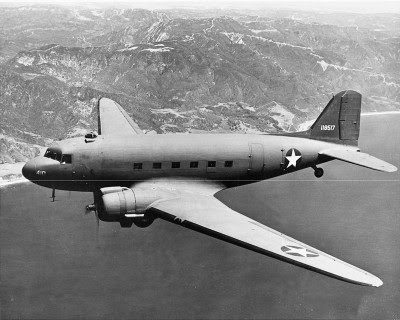
The first involves a WWII pilot’s flight through The Devil’s Triangle off the Florida coast. For decades, this fabled region has been swallowing airplanes and ships, but that didn’t stop the Army Air Corps from flying C-47s (DC-3) loaded with virgin passengers through it. Capitalizing on the area’s superstition, one flight crew decided to board their plane with two pair of white gloves tucked away. At cruise altitude and just prior to reaching The Devil’s Triangle, the pilots applied sticky glue to these gloves and fastened them to their control wheels. After engaging the autopilot, they climbed from their seats and strolled to the back, much to their passengers’ dismay. One soldier nervously asked what was going on in a manner I’ll forgo. Meeting this young man’s wide-eyed gaze, the pilot calmly explained that they were now in The Devil’s Triangle so they turned the flying over to the spirits. He told him not to worry and assured him they would return to their pilot seats once they had safely exited. With no cockpit door to hinder the passengers’ view, everyone on board was now staring at Mickey’s hands steering both control wheels, certain the spirits were in control. Imagine the roar at the Officer’s Club when the pilots shared their story that night. But here’s the clincher: while I was completing Air Force water survival training in The Devil’s Triangle, the ship’s captain was the son of a pilot who’s KC-135 (Boeing 707) was lost in The Devil’s Triangle. The crew never made a Mayday call and there was no sign of any wreckage. You decide whether The Triangle is cursed.

Now onto UFOs. In the 45 years I’ve been piloting airplanes, I have never seen a UFO, but I know two pilots who have. I’ll preface this with having made numerous Atlantic crossings on indigo nights, with the Milky Way illuminating my cockpit, I realize that from space Earth is nothing more than one minuscule dot. So considering the billions of stars and countless galaxies out there, it seems ludicrous to refute alien life any more than we do spirits from other worlds.

The first incident involved a fellow instructor pilot who, at the time of the occurrence, was an Air Force F-106 fighter pilot assigned to the Air Defense Command. One day he was scrambled to intercept an unidentified flying object, meaning any airborne target that had not established proper radio communication. The supersonic F-106 was such a capable interceptor that it could probably reach Heaven if gravity never tugged on its leash. With the fighter’s radar showing the target well above his aircraft, my friend centered the target by raising the nose and in full afterburner eventually established visual contact on the shiny object. By now, his F-106 had exceeded fifty thousand feet, far in excess of what was normal for this, or any other aircraft of the day, could fly. As he closed on the object, the target suddenly shot straight up and disappeared off the fighter’s and NORAD’s radar, never to be seen again. To this day, no aircraft in the world is capable of such a maneuver; especially from that altitude.

The second sighting involved an airline crew who, while flying the Atlantic red-eye, spotted a brightly lit craft much larger than any airliner flying next to them. Every crew member on board saw this unusual craft and reported it, but the air traffic controller saw nothing on his radar screen. The object disappeared without explanation, but later that night, reports of the same craft came from people all over Europe. In an apparent effort to protect us from panic, governments bury such events by fabricating stories that most of us buy into. If our fiction sales were as successful, we could all retire.

The beauty in these true stories is they allow mystery writers opportunities to explore unlimited dimensions and still convince their readers that it “could happen”. Ghostly reality shows are popular because on some level most of us believe there is an afterlife. UFO shows excel because many believe that aliens have visited our planet. Whether you’re using ghostly or alien themes for humor or drama, there is a wealth of related reference material in libraries and through the Internet. Ghosts and aliens never whine, complain, or shed tears, so try weaving one into your next story.

Sunday, August 15, 2010

Men [and Women] of Misery


By Mark W. Danielson

For the past eight years, I’ve had the honor of being part of the Men of Mystery event in Irvine, California. Here, some fifty authors dine with five hundred guests to discuss their mysteries and the writing business. Last November, Michael Connelly was the keynote speakers. Having served as the inaugural speaker, he graciously returned for its tenth anniversary. During his speech, he offered some interesting comments on writing that are worth sharing.

Connelly’s opening statement was that the authors in attendance were actually “Men of Misery”. Not in the sense of Stephen King’s thriller, Misery, but rather in the dedication it takes to craft suspenseful mysteries. He admitted to writing several manuscripts where he was well into them and then shelved them because he “wasn’t feeling it”. He also spoke about spending hours on a single paragraph or two. In this sense, the misery he was referring to isn’t about the writing process, but rather its painstaking re-writes.

Another item he stressed was daily writing. One of his mentors said you need to write at least fifteen minutes each day to mentally keep you in the loop. Fifteen minutes may not sound like much, but it can be devastating if you’re stuck on a single paragraph or thought.

A most interesting remark during Connelly’s presentation is in spite of his success, he still faces the same writing demons as the rest of us, and while he writes numerous sequels, he is not a formula writer, so every book requires the same scrutiny as his first. That's one you can take to the bank.

Readers may breeze through Connelly's pages not realizing that all of his words have been carefully chosen, every setting has been visualized, and every breath from his characters has a purpose. There are no mistakes in a well-written novel. He emphasized that in writing, it is never acceptable to say, “It’ll do”.

A wonderful cast of authors makes up Irvine’s Men of Mystery and Women of Mystery events. Some authors are also screen writers and producers. Some names are more familiar than others. But every author is equally dedicated to weaving quality webs. If you wish to check out their work, try browsing their names at the Men of Mystery link: http://64.23.9.69/mom/ If you find someone interesting, then check out their personal web sites. Most have chapter previews. Their mysteries await you.