by Jean Henry Mead
The jury’s still out on whether trailers actually sell books. Regardless, they showcase your work if you place them on U Tube and promote them on Facebook, Twitter and other social networking sites.
The videos range in price from less than a hundred dollars to several thousand, or you can produce them youself. My first book trailer for my historical novel, Escape, was created by a student who did a credible job for $60, but I wasn’t impressed with the music or photo quality. So I hired a professional to produce my second trailer, for $475, which carved a nice chunk from my royalties. A Village Shattered video recently earned four and a half points out of a possible five from a new video judging site, First Turning Point. The only nit mentioned was punctuation within the video.
My first self produced video, Diary of Murder, only earned three points from the same site. Among the nits, the judge said the music was too recognizable. The bottom line is that both books have sold equally well so the expensive trailer was probably a waste of hard earned royalties.
Whichever route you decide to take, book trailers are worth the investment if you have the time and energy to vigorously promote them.
Showing posts with label Diary of Murder. Show all posts
Showing posts with label Diary of Murder. Show all posts
Saturday, January 16, 2010

Saturday, March 21, 2009
Hounding the Mailbox and Waiting for Publication
By Jean Henry Mead
I’ve waited up to 18 months for a book to be published, but that was before publish on demand. POD is considered second class by many in the publishing industry, and I don't understand why. It's much more efficient than traditional publishing and isn’t it great that the wait between submission and publication is only a few months? Your books aren’t languishing in some warehouse, maybe never to be delivered to the bookstores. That's happened more often than publishers care to admit. It’s also the reason bestselling authors have delivered pizza, donuts and coffee to warehouse workers. It insures that their newly published books leave the loading dock.
If you’re young, you have all the time in the world to wait for a major publisher to produce your books. But as you grow older and wonder if you’re going to live long enough to see them in print, you think POD is the greatest invention since paper towels.
I came to that conclusion last year after the first novel of my Logan & Cafferty mystery/suspense series was orphaned. Who would want to publish a series that had already been published? I wondered. I received an almost immediate response from Avalon to my query letter, but I waited and waited for a go-ahead to my submission. Seven months later and tired of waiting, I decided to go with a small POD publisher that is very accommodating.
My first two books were published within three months and released not only in print but Kindle and Fictionwise multi-format. Not on the bestseller list, by any means, but they remained #1 in sales for a couple of months at Fictionwise-epress. That made it worthwhile.
This week Diary of Murder, the second novel in my mystery series, appeared in print at Amazon.com nearly a month after the Kindle edition, and it’s difficult to find although the Kindle edition pops right up. I finally tracked it down at: http://tiny.cc/gO2vi, and wonder if POD editions are given second class status by online bookstores. I think it’s time, especially during this economic downturn, that POD publishing receives some respect.
What do you think?
I’ve waited up to 18 months for a book to be published, but that was before publish on demand. POD is considered second class by many in the publishing industry, and I don't understand why. It's much more efficient than traditional publishing and isn’t it great that the wait between submission and publication is only a few months? Your books aren’t languishing in some warehouse, maybe never to be delivered to the bookstores. That's happened more often than publishers care to admit. It’s also the reason bestselling authors have delivered pizza, donuts and coffee to warehouse workers. It insures that their newly published books leave the loading dock.
If you’re young, you have all the time in the world to wait for a major publisher to produce your books. But as you grow older and wonder if you’re going to live long enough to see them in print, you think POD is the greatest invention since paper towels.
I came to that conclusion last year after the first novel of my Logan & Cafferty mystery/suspense series was orphaned. Who would want to publish a series that had already been published? I wondered. I received an almost immediate response from Avalon to my query letter, but I waited and waited for a go-ahead to my submission. Seven months later and tired of waiting, I decided to go with a small POD publisher that is very accommodating.
My first two books were published within three months and released not only in print but Kindle and Fictionwise multi-format. Not on the bestseller list, by any means, but they remained #1 in sales for a couple of months at Fictionwise-epress. That made it worthwhile.

This week Diary of Murder, the second novel in my mystery series, appeared in print at Amazon.com nearly a month after the Kindle edition, and it’s difficult to find although the Kindle edition pops right up. I finally tracked it down at: http://tiny.cc/gO2vi, and wonder if POD editions are given second class status by online bookstores. I think it’s time, especially during this economic downturn, that POD publishing receives some respect.
What do you think?
Saturday, February 21, 2009
Judging a Book by its Cover
By Jean Henry Mead
Can a great looking book cover sell a poorly written book? The answer is yes if the buyer is in a hurry and doesn’t take time to read. Conversely, does a poorly designed cover discourage sales of a good book? It can if word of mouth hasn’t proclaimed the book a good read or it wasn’t written by a favorite or bestselling author.
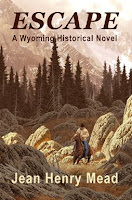 A book cover should represent its contents, mood and style. The artwork should not only be attractive but represent the book’s meaning as well as attract potential buyers. It should also project drama and literary punch. That’s a tall order, which doesn’t always happen. Books that are projected to sell less than 5,000 copies are deemed unworthy of original artwork and are consigned to the cheap stock illustrations.
In large publishing houses, the author, who usually wants complete approval of the book cover, rarely has the leverage to get it. Most writers have to settle for some kind of guaranteed consultation, which means that they get to see a semi-final proof. Working with a small press has its advantages if the publisher allows an author the right to reject a cover he or she don’t like, but that doesn’t always happen. Sometimes none of the artwork pleases you so you choose the one that’s least objectionable.
 Because I don’t want to make negative remarks about anyone else’s books, I’ll use my own as examples. My historical Wyoming novel, Escape, has an attractive cover and remained number one in sales for two months in multi format while my recent mystery/suspense novel, A Village Shattered, topped the list for only half that time. I blame it on the lackluster cover, which is gray to represent the fog that hides the serial killer. It looks okay when held, but comes across as dreary and boring online.
The second book in the series, Diary of Murder, has a snowy mountain background instead of a diary, which has little to do with the title although mountains do play a role later in the plot. Fortunately, I was able to submit a photo I had taken of the actual area instead of the one the publisher was planning to use, but I’m still not completely happy with the results.
 Another problem that comes into play is the size of the author’s name. The name should increase in size with each book published, but if you have three names like mine, it can only grow large enough to fit across the page. That’s not author ego, it tells the potential buyer your status in the publishing industry.
Color has a lot to do with the cover’s appeal. Reds, bright blues, greens and yellows catch the eye and shout, “Pick me up and read me.” While grays, tans, white and beige backgrounds don’t appear to be as interesting unless, of course, the foreground is colorful and attractively designed. Rich colors such as burgundy with gold lettering denote a richness of plot as well.
Which book covers appeal most to you and did you pick them up because of their designs?
Can a great looking book cover sell a poorly written book? The answer is yes if the buyer is in a hurry and doesn’t take time to read. Conversely, does a poorly designed cover discourage sales of a good book? It can if word of mouth hasn’t proclaimed the book a good read or it wasn’t written by a favorite or bestselling author.
A book cover should represent its contents, mood and style. The artwork should not only be attractive but represent the book’s meaning as well as attract potential buyers. It should also project drama and literary punch. That’s a tall order, which doesn’t always happen. Books that are projected to sell less than 5,000 copies are deemed unworthy of original artwork and are consigned to the cheap stock illustrations.In large publishing houses, the author, who usually wants complete approval of the book cover, rarely has the leverage to get it. Most writers have to settle for some kind of guaranteed consultation, which means that they get to see a semi-final proof. Working with a small press has its advantages if the publisher allows an author the right to reject a cover he or she don’t like, but that doesn’t always happen. Sometimes none of the artwork pleases you so you choose the one that’s least objectionable.
 Because I don’t want to make negative remarks about anyone else’s books, I’ll use my own as examples. My historical Wyoming novel, Escape, has an attractive cover and remained number one in sales for two months in multi format while my recent mystery/suspense novel, A Village Shattered, topped the list for only half that time. I blame it on the lackluster cover, which is gray to represent the fog that hides the serial killer. It looks okay when held, but comes across as dreary and boring online.
The second book in the series, Diary of Murder, has a snowy mountain background instead of a diary, which has little to do with the title although mountains do play a role later in the plot. Fortunately, I was able to submit a photo I had taken of the actual area instead of the one the publisher was planning to use, but I’m still not completely happy with the results.
 Another problem that comes into play is the size of the author’s name. The name should increase in size with each book published, but if you have three names like mine, it can only grow large enough to fit across the page. That’s not author ego, it tells the potential buyer your status in the publishing industry.
Color has a lot to do with the cover’s appeal. Reds, bright blues, greens and yellows catch the eye and shout, “Pick me up and read me.” While grays, tans, white and beige backgrounds don’t appear to be as interesting unless, of course, the foreground is colorful and attractively designed. Rich colors such as burgundy with gold lettering denote a richness of plot as well.
Which book covers appeal most to you and did you pick them up because of their designs?
Saturday, February 7, 2009
The Pain of Killing Your Characters
by Jean Henry Mead
Ever wonder how novelists decide which of their characters to kill? I was recently forced to kill a character I loved because I had written myself into a corner. I was so upset that I had to stop writing that day. I then remembered something Benjamin Capps told me during an interview:
“Probably no reader of mine ever felt so strongly [about the storyline] or shed a small tear unless I had already done so in the writing.”
Emotional investment in a writer’s characters is undoubtedly what makes a novel successful. If an author doesn’t really care about his characters, why should the reader? But how involved does a writer have to be to make his readers care? That’s a question someone much smarter than I am will have to answer.
I do know, however, that many of us live with our characters 24/7, until the book comes to a conclusion. Then it’s hard for me to let go, which is why I like writing a series. The characters to whom I’ve given birth can age right along with me, unless, of course, I’m forced to kill them off.
After covering a police beat for eight years and writing about the worst aspects of human nature, I decided to write a senior sleuth series. My Logan & Cafferty series features two 60-year-old widows; one a private investigator’s wife, the other a mystery novel buff. In the first book, A Village Shattered, the women are forced to discover the identity of a compulsive murderer, who is alphabetically doing away with their friends. They also discover that their own names are on the killer’s list.
In the second novel, Diary of Murder, I placed them in a motorhome in the midst of a Rocky Mountain blizzard. I had previously killed one my character’s sister, but the reader doesn’t get to know her until her diary is found and read throughout the novel. I didn’t shed a tear until the last entry was read.
I like my main characters because they’re witty and sassy, according to one reviewer, and I could never bring myself to knock one of them off. But anyone who threatens them in any way is in big trouble in my books.
Ever wonder how novelists decide which of their characters to kill? I was recently forced to kill a character I loved because I had written myself into a corner. I was so upset that I had to stop writing that day. I then remembered something Benjamin Capps told me during an interview:
“Probably no reader of mine ever felt so strongly [about the storyline] or shed a small tear unless I had already done so in the writing.”
Emotional investment in a writer’s characters is undoubtedly what makes a novel successful. If an author doesn’t really care about his characters, why should the reader? But how involved does a writer have to be to make his readers care? That’s a question someone much smarter than I am will have to answer.
I do know, however, that many of us live with our characters 24/7, until the book comes to a conclusion. Then it’s hard for me to let go, which is why I like writing a series. The characters to whom I’ve given birth can age right along with me, unless, of course, I’m forced to kill them off.
After covering a police beat for eight years and writing about the worst aspects of human nature, I decided to write a senior sleuth series. My Logan & Cafferty series features two 60-year-old widows; one a private investigator’s wife, the other a mystery novel buff. In the first book, A Village Shattered, the women are forced to discover the identity of a compulsive murderer, who is alphabetically doing away with their friends. They also discover that their own names are on the killer’s list.
In the second novel, Diary of Murder, I placed them in a motorhome in the midst of a Rocky Mountain blizzard. I had previously killed one my character’s sister, but the reader doesn’t get to know her until her diary is found and read throughout the novel. I didn’t shed a tear until the last entry was read.
I like my main characters because they’re witty and sassy, according to one reviewer, and I could never bring myself to knock one of them off. But anyone who threatens them in any way is in big trouble in my books.
Subscribe to:
Posts (Atom)