by Jean Henry Mead
The jury’s still out on whether trailers actually sell books. Regardless, they showcase your work if you place them on U Tube and promote them on Facebook, Twitter and other social networking sites.
The videos range in price from less than a hundred dollars to several thousand, or you can produce them youself. My first book trailer for my historical novel, Escape, was created by a student who did a credible job for $60, but I wasn’t impressed with the music or photo quality. So I hired a professional to produce my second trailer, for $475, which carved a nice chunk from my royalties. A Village Shattered video recently earned four and a half points out of a possible five from a new video judging site, First Turning Point. The only nit mentioned was punctuation within the video.
My first self produced video, Diary of Murder, only earned three points from the same site. Among the nits, the judge said the music was too recognizable. The bottom line is that both books have sold equally well so the expensive trailer was probably a waste of hard earned royalties.
Whichever route you decide to take, book trailers are worth the investment if you have the time and energy to vigorously promote them.
Showing posts with label A Village Shattered. Show all posts
Showing posts with label A Village Shattered. Show all posts
Saturday, January 16, 2010

Saturday, April 25, 2009
Wake up Your Characters
by Jean Henry Mead
Are your characters made of cardboard with no real distinguishing traits to separate one from another? Do they all sound alike when they speak? Are they just sitting around on the front porch sipping ice tea and discussing the garden show or their current problems? Get them up and moving.
Author Tim O’Brien once said, “Memory plus language plus imagination make spirits dance in your head.” I don’t think O’Brien meant to place your characters in a 60s disco, although I took my senior sleuth widows to a male stripper club in my mystery/suspense novel, A Village Shattered.
If your characters are sluggish and don’t seem to want to do what you want them to, write character sketches and give each of them a problem or a least a shared experience to look back on. When it comes to memory, no two people recall the same incident exactly alike. If it was a murder scene they remember, are one or more of them having nightmares about the victim? Did one of them kill that person and the memory’s haunting him or her?
How are you telling about the past experiences your characters have had? What kind of time lines are you using? Make a list of time lines that apply to your characters. By time lines I mean periods since an important event took place. One character might say, “I ain’t had a drink since me da’s wake. I was so sick I thought I was gonna die, and feared I wasn’t goin’ to." His English cousin may remember the same wake, saying, “Bloody hell, that was a pip of a party, eh?” You get the idea. Flesh out your characters and give them their own distinct traits and speech patterns.
Imagination may not come into play until you revise your manuscript, or what Toni Morrison calls the “delicious work of revision.” First drafts are usually a massive blob that need revising, polishing and refining. That’s when your dreary dialogue or cardboard characters are really brought to life.
Margaret Love Denman advises writers to turn off their computer screens while writing a new chapter or scene so that you won’t be distracted by punctuation or spelling errors. When finished, turn the screen back on and begin the rewriting process. Take your time and refine the work until you’re satisfied it’s the best you can do, and that your characters are as defined and different as you can make them.
Novelist Marlys Millhiser once told me that she likes to sit in restaurants, airports and other public places to eavesdrop on conversations. It’s a great way to pick up story ideas as well as a variety of speech patterns. Because no one speaks exactly alike, a good exercise is to close your eyes and listen to the different speech patterns of those around you.
While you’re at it, watch the way people walk and gesture. Notice the way they look when they express surprise, anger, sorrow and happiness. None of us are cut from the same proverbial cloth and none of your characters should exist as cardboard cutouts.
Are your characters made of cardboard with no real distinguishing traits to separate one from another? Do they all sound alike when they speak? Are they just sitting around on the front porch sipping ice tea and discussing the garden show or their current problems? Get them up and moving.
Author Tim O’Brien once said, “Memory plus language plus imagination make spirits dance in your head.” I don’t think O’Brien meant to place your characters in a 60s disco, although I took my senior sleuth widows to a male stripper club in my mystery/suspense novel, A Village Shattered.
If your characters are sluggish and don’t seem to want to do what you want them to, write character sketches and give each of them a problem or a least a shared experience to look back on. When it comes to memory, no two people recall the same incident exactly alike. If it was a murder scene they remember, are one or more of them having nightmares about the victim? Did one of them kill that person and the memory’s haunting him or her?
How are you telling about the past experiences your characters have had? What kind of time lines are you using? Make a list of time lines that apply to your characters. By time lines I mean periods since an important event took place. One character might say, “I ain’t had a drink since me da’s wake. I was so sick I thought I was gonna die, and feared I wasn’t goin’ to." His English cousin may remember the same wake, saying, “Bloody hell, that was a pip of a party, eh?” You get the idea. Flesh out your characters and give them their own distinct traits and speech patterns.
Imagination may not come into play until you revise your manuscript, or what Toni Morrison calls the “delicious work of revision.” First drafts are usually a massive blob that need revising, polishing and refining. That’s when your dreary dialogue or cardboard characters are really brought to life.
Margaret Love Denman advises writers to turn off their computer screens while writing a new chapter or scene so that you won’t be distracted by punctuation or spelling errors. When finished, turn the screen back on and begin the rewriting process. Take your time and refine the work until you’re satisfied it’s the best you can do, and that your characters are as defined and different as you can make them.
Novelist Marlys Millhiser once told me that she likes to sit in restaurants, airports and other public places to eavesdrop on conversations. It’s a great way to pick up story ideas as well as a variety of speech patterns. Because no one speaks exactly alike, a good exercise is to close your eyes and listen to the different speech patterns of those around you.
While you’re at it, watch the way people walk and gesture. Notice the way they look when they express surprise, anger, sorrow and happiness. None of us are cut from the same proverbial cloth and none of your characters should exist as cardboard cutouts.
Saturday, February 21, 2009
Judging a Book by its Cover
By Jean Henry Mead
Can a great looking book cover sell a poorly written book? The answer is yes if the buyer is in a hurry and doesn’t take time to read. Conversely, does a poorly designed cover discourage sales of a good book? It can if word of mouth hasn’t proclaimed the book a good read or it wasn’t written by a favorite or bestselling author.
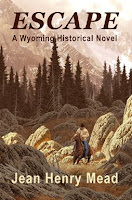 A book cover should represent its contents, mood and style. The artwork should not only be attractive but represent the book’s meaning as well as attract potential buyers. It should also project drama and literary punch. That’s a tall order, which doesn’t always happen. Books that are projected to sell less than 5,000 copies are deemed unworthy of original artwork and are consigned to the cheap stock illustrations.
In large publishing houses, the author, who usually wants complete approval of the book cover, rarely has the leverage to get it. Most writers have to settle for some kind of guaranteed consultation, which means that they get to see a semi-final proof. Working with a small press has its advantages if the publisher allows an author the right to reject a cover he or she don’t like, but that doesn’t always happen. Sometimes none of the artwork pleases you so you choose the one that’s least objectionable.
 Because I don’t want to make negative remarks about anyone else’s books, I’ll use my own as examples. My historical Wyoming novel, Escape, has an attractive cover and remained number one in sales for two months in multi format while my recent mystery/suspense novel, A Village Shattered, topped the list for only half that time. I blame it on the lackluster cover, which is gray to represent the fog that hides the serial killer. It looks okay when held, but comes across as dreary and boring online.
The second book in the series, Diary of Murder, has a snowy mountain background instead of a diary, which has little to do with the title although mountains do play a role later in the plot. Fortunately, I was able to submit a photo I had taken of the actual area instead of the one the publisher was planning to use, but I’m still not completely happy with the results.
 Another problem that comes into play is the size of the author’s name. The name should increase in size with each book published, but if you have three names like mine, it can only grow large enough to fit across the page. That’s not author ego, it tells the potential buyer your status in the publishing industry.
Color has a lot to do with the cover’s appeal. Reds, bright blues, greens and yellows catch the eye and shout, “Pick me up and read me.” While grays, tans, white and beige backgrounds don’t appear to be as interesting unless, of course, the foreground is colorful and attractively designed. Rich colors such as burgundy with gold lettering denote a richness of plot as well.
Which book covers appeal most to you and did you pick them up because of their designs?
Can a great looking book cover sell a poorly written book? The answer is yes if the buyer is in a hurry and doesn’t take time to read. Conversely, does a poorly designed cover discourage sales of a good book? It can if word of mouth hasn’t proclaimed the book a good read or it wasn’t written by a favorite or bestselling author.
A book cover should represent its contents, mood and style. The artwork should not only be attractive but represent the book’s meaning as well as attract potential buyers. It should also project drama and literary punch. That’s a tall order, which doesn’t always happen. Books that are projected to sell less than 5,000 copies are deemed unworthy of original artwork and are consigned to the cheap stock illustrations.In large publishing houses, the author, who usually wants complete approval of the book cover, rarely has the leverage to get it. Most writers have to settle for some kind of guaranteed consultation, which means that they get to see a semi-final proof. Working with a small press has its advantages if the publisher allows an author the right to reject a cover he or she don’t like, but that doesn’t always happen. Sometimes none of the artwork pleases you so you choose the one that’s least objectionable.
 Because I don’t want to make negative remarks about anyone else’s books, I’ll use my own as examples. My historical Wyoming novel, Escape, has an attractive cover and remained number one in sales for two months in multi format while my recent mystery/suspense novel, A Village Shattered, topped the list for only half that time. I blame it on the lackluster cover, which is gray to represent the fog that hides the serial killer. It looks okay when held, but comes across as dreary and boring online.
The second book in the series, Diary of Murder, has a snowy mountain background instead of a diary, which has little to do with the title although mountains do play a role later in the plot. Fortunately, I was able to submit a photo I had taken of the actual area instead of the one the publisher was planning to use, but I’m still not completely happy with the results.
 Another problem that comes into play is the size of the author’s name. The name should increase in size with each book published, but if you have three names like mine, it can only grow large enough to fit across the page. That’s not author ego, it tells the potential buyer your status in the publishing industry.
Color has a lot to do with the cover’s appeal. Reds, bright blues, greens and yellows catch the eye and shout, “Pick me up and read me.” While grays, tans, white and beige backgrounds don’t appear to be as interesting unless, of course, the foreground is colorful and attractively designed. Rich colors such as burgundy with gold lettering denote a richness of plot as well.
Which book covers appeal most to you and did you pick them up because of their designs?
Saturday, February 7, 2009
The Pain of Killing Your Characters
by Jean Henry Mead
Ever wonder how novelists decide which of their characters to kill? I was recently forced to kill a character I loved because I had written myself into a corner. I was so upset that I had to stop writing that day. I then remembered something Benjamin Capps told me during an interview:
“Probably no reader of mine ever felt so strongly [about the storyline] or shed a small tear unless I had already done so in the writing.”
Emotional investment in a writer’s characters is undoubtedly what makes a novel successful. If an author doesn’t really care about his characters, why should the reader? But how involved does a writer have to be to make his readers care? That’s a question someone much smarter than I am will have to answer.
I do know, however, that many of us live with our characters 24/7, until the book comes to a conclusion. Then it’s hard for me to let go, which is why I like writing a series. The characters to whom I’ve given birth can age right along with me, unless, of course, I’m forced to kill them off.
After covering a police beat for eight years and writing about the worst aspects of human nature, I decided to write a senior sleuth series. My Logan & Cafferty series features two 60-year-old widows; one a private investigator’s wife, the other a mystery novel buff. In the first book, A Village Shattered, the women are forced to discover the identity of a compulsive murderer, who is alphabetically doing away with their friends. They also discover that their own names are on the killer’s list.
In the second novel, Diary of Murder, I placed them in a motorhome in the midst of a Rocky Mountain blizzard. I had previously killed one my character’s sister, but the reader doesn’t get to know her until her diary is found and read throughout the novel. I didn’t shed a tear until the last entry was read.
I like my main characters because they’re witty and sassy, according to one reviewer, and I could never bring myself to knock one of them off. But anyone who threatens them in any way is in big trouble in my books.
Ever wonder how novelists decide which of their characters to kill? I was recently forced to kill a character I loved because I had written myself into a corner. I was so upset that I had to stop writing that day. I then remembered something Benjamin Capps told me during an interview:
“Probably no reader of mine ever felt so strongly [about the storyline] or shed a small tear unless I had already done so in the writing.”
Emotional investment in a writer’s characters is undoubtedly what makes a novel successful. If an author doesn’t really care about his characters, why should the reader? But how involved does a writer have to be to make his readers care? That’s a question someone much smarter than I am will have to answer.
I do know, however, that many of us live with our characters 24/7, until the book comes to a conclusion. Then it’s hard for me to let go, which is why I like writing a series. The characters to whom I’ve given birth can age right along with me, unless, of course, I’m forced to kill them off.
After covering a police beat for eight years and writing about the worst aspects of human nature, I decided to write a senior sleuth series. My Logan & Cafferty series features two 60-year-old widows; one a private investigator’s wife, the other a mystery novel buff. In the first book, A Village Shattered, the women are forced to discover the identity of a compulsive murderer, who is alphabetically doing away with their friends. They also discover that their own names are on the killer’s list.
In the second novel, Diary of Murder, I placed them in a motorhome in the midst of a Rocky Mountain blizzard. I had previously killed one my character’s sister, but the reader doesn’t get to know her until her diary is found and read throughout the novel. I didn’t shed a tear until the last entry was read.
I like my main characters because they’re witty and sassy, according to one reviewer, and I could never bring myself to knock one of them off. But anyone who threatens them in any way is in big trouble in my books.
Monday, December 29, 2008
A Village Shattered’s Logan & Cafferty Interview
By Jean Henry Mead
Today I’m interviewing Dana Logan and Sarah Cafferty, two main characters from A Village Shattered, my latest senior sleuth mystery/suspense novel. My 60-year-old senior sleuths aren’t too pleased with me at the moment:
Dana, having a serial killer lurking in the San Joaquin Valley fog must have put a damper on your Christmas festivities?
It did, and we received some strange gifts. A friend in Arizona sent me a helmet to protect me from a possible attack. She also sent a neck brace in case the killer tries to strangle me, like he did to two of our club members.
Sarah, did you also receive some weird presents?
My kids sent me a baseball bat and a paint ball gun. The sheriff won’t allow us real guns, I guess he thinks we’ll shoot ourselves in the foot, or each other.”
Guns are dangerous if you don’t know how to use them.
Dana’s late husband taught her to use all kinds of guns. And our friend Micki shot all the game meat for her freezer. Everyone thought her late husband shot the deer, but Micki says he couldn’t hit a barn at five paces. You won’t tell anyone, will you?
I’m afraid I already did. Whoever reads the book will know why you and your surviving club members are being killed alphabetically.
We were doing just fine until you brought that serial killer into our midst. Our So and Sew Club Members were happily meeting each week to do needlework and swap retirement village gossip. Why’d you have to ruin it?
Sarah, you don’t write a mystery/suspense novel without at least one body.
One sure, but your serial killer is trying to send us all to the happy hunting ground. Why so many victims?
I guess it’s because I give my characters free rein and the killer wasn’t satisfied with just one body. . . By the way, Dana, how are you coming along with your sleuthing? Found any clues?
You planted plenty of red herrings but we’re sifting through them. I really think you have a mean streak because you planted us all in the fog. Thank goodness my daughter Kerrie arrived in time to help with the investigation. She’s a journalist, you know, and thanks to you she’s also on the killer’s list.
Which scenes were the most frightening for you, Dana?
When the killer locked us in the closet. He was planning to turn the old farmhouse into a crematorium, with us in it. It was even worse when he kidnapped Kerrie.
What about you, Sarah?
I was nearly scared to death when Dana and Kerri were lost in the fog and had to steal a police car. I didn’t know about it until later. I just knew they were missing.
Well, ladies, are you looking forward to a happy new year?
Fat chance. You’re gonna put us in a motorhome in the middle of a Rocky Mountain blizzard in the next novel, Diary of Murder. Why can’t you leave well enough alone?
Sorry, Sarah. I just can’t help myself . . . It’s time to tell everyone, “Happy New Year.”
Today I’m interviewing Dana Logan and Sarah Cafferty, two main characters from A Village Shattered, my latest senior sleuth mystery/suspense novel. My 60-year-old senior sleuths aren’t too pleased with me at the moment:
Dana, having a serial killer lurking in the San Joaquin Valley fog must have put a damper on your Christmas festivities?
It did, and we received some strange gifts. A friend in Arizona sent me a helmet to protect me from a possible attack. She also sent a neck brace in case the killer tries to strangle me, like he did to two of our club members.
Sarah, did you also receive some weird presents?
My kids sent me a baseball bat and a paint ball gun. The sheriff won’t allow us real guns, I guess he thinks we’ll shoot ourselves in the foot, or each other.”
Guns are dangerous if you don’t know how to use them.
Dana’s late husband taught her to use all kinds of guns. And our friend Micki shot all the game meat for her freezer. Everyone thought her late husband shot the deer, but Micki says he couldn’t hit a barn at five paces. You won’t tell anyone, will you?
I’m afraid I already did. Whoever reads the book will know why you and your surviving club members are being killed alphabetically.
We were doing just fine until you brought that serial killer into our midst. Our So and Sew Club Members were happily meeting each week to do needlework and swap retirement village gossip. Why’d you have to ruin it?
Sarah, you don’t write a mystery/suspense novel without at least one body.
One sure, but your serial killer is trying to send us all to the happy hunting ground. Why so many victims?
I guess it’s because I give my characters free rein and the killer wasn’t satisfied with just one body. . . By the way, Dana, how are you coming along with your sleuthing? Found any clues?
You planted plenty of red herrings but we’re sifting through them. I really think you have a mean streak because you planted us all in the fog. Thank goodness my daughter Kerrie arrived in time to help with the investigation. She’s a journalist, you know, and thanks to you she’s also on the killer’s list.
Which scenes were the most frightening for you, Dana?
When the killer locked us in the closet. He was planning to turn the old farmhouse into a crematorium, with us in it. It was even worse when he kidnapped Kerrie.
What about you, Sarah?
I was nearly scared to death when Dana and Kerri were lost in the fog and had to steal a police car. I didn’t know about it until later. I just knew they were missing.
Well, ladies, are you looking forward to a happy new year?
Fat chance. You’re gonna put us in a motorhome in the middle of a Rocky Mountain blizzard in the next novel, Diary of Murder. Why can’t you leave well enough alone?
Sorry, Sarah. I just can’t help myself . . . It’s time to tell everyone, “Happy New Year.”
Saturday, December 20, 2008
Never Polish the First Chapter Until the Final Draft is Done
by Jean Henry Mead
I’ve rewritten a first chapter many times before progressing to the second, only to find that it had to be rewritten to fall in the line with the rest of the novel. I finally learned to write it once and forget it until the first draft is done.
I’ve never been able to outline a novel because I literally give my characters free rein. And they rarely submit to what I’ve planned for them. They have minds of their own and I wouldn’t want them doing something out of character. In my current Logan & Cafferty series, my feisty 60-year-old senior sleuths surprise me by doing things I’d never consider before sitting down to write. Dana Logan and Sarah Cafferty live with me 24/7 while I’m writing about them and they have their own plans for what should happen that day. Sometimes I have to retreat to chapter one to include some of their "brilliant" ideas.
In A Village Shattered, Logan and Cafferty gather their friends to discuss the serial killings taking place in their retirement village. Out of that meeting came many new ideas about who the murderer might be and why he or she was on a killing spree. Until the third quarter of the book, even I didn’t know who it was, and I was forced to return to early chapters to flesh out the killer by adding inner monologue.
In the second novel, Diary of Murder, due out early next spring, I take my sleuths out of California and place them in a motorhome in the middle of a Rocky Mountain blizzard. Fortunately, that had happened to me, so I could write convincingly about the life and death experience. The blizzard starts the novel off with a bang, but they face a similar situation later in the plot, so I had to swap some snowy details between the first and later chapters so that they didn't appear too similar. Weather plays a lage role in any northern state, and gives the plot an element of danger.
In A Village Shattered, the opaque San Joaquin Valley tule (too-ley) fog hides the serial killer, but I didn’t even think about the fog until I was writing chapter three. Having lived there for a dozen years, I know the horror of trying to drive in pea soup fog, so I switched seasons and went back to chapter one to add it to the plot. In doing so, it tied all aspects of the story together.
I’ve rewritten a first chapter many times before progressing to the second, only to find that it had to be rewritten to fall in the line with the rest of the novel. I finally learned to write it once and forget it until the first draft is done.
I’ve never been able to outline a novel because I literally give my characters free rein. And they rarely submit to what I’ve planned for them. They have minds of their own and I wouldn’t want them doing something out of character. In my current Logan & Cafferty series, my feisty 60-year-old senior sleuths surprise me by doing things I’d never consider before sitting down to write. Dana Logan and Sarah Cafferty live with me 24/7 while I’m writing about them and they have their own plans for what should happen that day. Sometimes I have to retreat to chapter one to include some of their "brilliant" ideas.
In A Village Shattered, Logan and Cafferty gather their friends to discuss the serial killings taking place in their retirement village. Out of that meeting came many new ideas about who the murderer might be and why he or she was on a killing spree. Until the third quarter of the book, even I didn’t know who it was, and I was forced to return to early chapters to flesh out the killer by adding inner monologue.
In the second novel, Diary of Murder, due out early next spring, I take my sleuths out of California and place them in a motorhome in the middle of a Rocky Mountain blizzard. Fortunately, that had happened to me, so I could write convincingly about the life and death experience. The blizzard starts the novel off with a bang, but they face a similar situation later in the plot, so I had to swap some snowy details between the first and later chapters so that they didn't appear too similar. Weather plays a lage role in any northern state, and gives the plot an element of danger.
In A Village Shattered, the opaque San Joaquin Valley tule (too-ley) fog hides the serial killer, but I didn’t even think about the fog until I was writing chapter three. Having lived there for a dozen years, I know the horror of trying to drive in pea soup fog, so I switched seasons and went back to chapter one to add it to the plot. In doing so, it tied all aspects of the story together.
Saturday, November 29, 2008
The Mysteries of Writing
by Jean Henry Mead
I wonder whether some of us are born with a compulsion to write. Many writers have created not only elaborate stories while still in elementary school, but novels and three-act plays.
But why do we write?
Mignon G. Eberhart once said: “I write because I like to, sometimes hate to, but I have to write. I started when I was very young, almost as soon as I could put pencil to paper.”
Fellow mystery writer Lawrence Kamarck added: “I suppose I have a storyteller’s compulsion. I want to tell somebody what’s happening to all of us. I’m convinced nobody really knows but me. And because I want to keep the [reader’s] attention, I tell my story with as much force and drama as possible, within credible limits.”
Pulitzer winner A. B. Guthrie, Jr. told me during an interview that “the fun is having written well.” But he confessed that he didn’t enjoy the actual process of writing. “At the end of the day, I go back over it and say to myself, ‘By golly, that’s right, that’s right.’ And then I’m rewarded.”
So why do we write mysteries?
Ross MacDonald said: “Mystery stories have always interested me because they seem to correspond with life. They deal with the problems of causality and guilt that concern me.”
Loren D. Estleman wrote as an adolescent and sold his first novel at 23. He saw little of his parents because he spent so much time in his unheated, upstairs room, his only companion a typewriter. "I lived in my study and I didn’t have much of a private life,” he said. “It revolved around my writing.”
I like Estleman’s description of a mystery. “For me, a good mystery places story and character ahead of all else, yet never loses sight of the simple truth that in order to be a mystery, a question must be asked. It needn’t be a whodunit, and might be something as simple and maddening as why the murdered man had three left shoes in his closet and no mates. If the writer has done his job well, the reader will forget the question as the story draws him in. But there had damn well better be a mystery involved if he’s going to call it one.”
I pulled an aging copy of Mystery Writers Handbook from one of my book shelves and found the following quote from the editor, Lawrence Treat: “Great mysteries are great novels, like Crime and Punishment, A Tale of Two Cities and The Scarlet Pimpernel. And they’re clearly mysteries.”
I then asked my fellow Murderous Musings blog team members why they write mysteries. Ben Small had this to say:
“I write mysteries and thrillers because I love the high stakes competition between good and evil, the uncertainty of justice, and the suspense of the ticking clock as the protagonist puzzles out a solution. Good stuff, escaping into a make-believe puzzle-world where I push the reader to beat me to the solution.”
Beth Terrell said that she loves the fact that the detective puts his own life at risk to protect others. She also loves the fact that “the good guy always wins--or almost always--even if it’s at a terrible cost. I feel like mysteries work on so many different levels. They are ripping good stories, thought-provoking puzzles, and wonderful vehicles to write about real human problems—things that matter. They’re a challenge to write; a good mystery or thriller has to do all the things a literary novel does and weave a gripping plot as well.”
Pat Browning concluded that a mystery is the oldest form of storytelling. Sometimes there's a moral, sometimes it's a cautionary tale. It reassures us that good triumphs over evil. It satisfies our need to know that everything turns out all right in the end. Contemporary mysteries often have a romantic angle, and a humorous twist. In short, the mystery offers something for every reader.
I enjoy not only writing mysteries but reading them as well. If I haven't solved the crime or discovered the murderer before the detective reveals his name, I feel that the author has done a great job. And I hope you'll think I've done a credible job with my new mystery, A Village Shattered. My Shattered blog tour starts tomorrow at My Friend, Amy's and the rest of the schedule is up at my blog site along with my virtual guestbook, which I hope you'll sign, and my new book trailer.
I wonder whether some of us are born with a compulsion to write. Many writers have created not only elaborate stories while still in elementary school, but novels and three-act plays.
But why do we write?
Mignon G. Eberhart once said: “I write because I like to, sometimes hate to, but I have to write. I started when I was very young, almost as soon as I could put pencil to paper.”
Fellow mystery writer Lawrence Kamarck added: “I suppose I have a storyteller’s compulsion. I want to tell somebody what’s happening to all of us. I’m convinced nobody really knows but me. And because I want to keep the [reader’s] attention, I tell my story with as much force and drama as possible, within credible limits.”
Pulitzer winner A. B. Guthrie, Jr. told me during an interview that “the fun is having written well.” But he confessed that he didn’t enjoy the actual process of writing. “At the end of the day, I go back over it and say to myself, ‘By golly, that’s right, that’s right.’ And then I’m rewarded.”
So why do we write mysteries?
Ross MacDonald said: “Mystery stories have always interested me because they seem to correspond with life. They deal with the problems of causality and guilt that concern me.”
Loren D. Estleman wrote as an adolescent and sold his first novel at 23. He saw little of his parents because he spent so much time in his unheated, upstairs room, his only companion a typewriter. "I lived in my study and I didn’t have much of a private life,” he said. “It revolved around my writing.”
I like Estleman’s description of a mystery. “For me, a good mystery places story and character ahead of all else, yet never loses sight of the simple truth that in order to be a mystery, a question must be asked. It needn’t be a whodunit, and might be something as simple and maddening as why the murdered man had three left shoes in his closet and no mates. If the writer has done his job well, the reader will forget the question as the story draws him in. But there had damn well better be a mystery involved if he’s going to call it one.”
I pulled an aging copy of Mystery Writers Handbook from one of my book shelves and found the following quote from the editor, Lawrence Treat: “Great mysteries are great novels, like Crime and Punishment, A Tale of Two Cities and The Scarlet Pimpernel. And they’re clearly mysteries.”
I then asked my fellow Murderous Musings blog team members why they write mysteries. Ben Small had this to say:
“I write mysteries and thrillers because I love the high stakes competition between good and evil, the uncertainty of justice, and the suspense of the ticking clock as the protagonist puzzles out a solution. Good stuff, escaping into a make-believe puzzle-world where I push the reader to beat me to the solution.”
Beth Terrell said that she loves the fact that the detective puts his own life at risk to protect others. She also loves the fact that “the good guy always wins--or almost always--even if it’s at a terrible cost. I feel like mysteries work on so many different levels. They are ripping good stories, thought-provoking puzzles, and wonderful vehicles to write about real human problems—things that matter. They’re a challenge to write; a good mystery or thriller has to do all the things a literary novel does and weave a gripping plot as well.”
Pat Browning concluded that a mystery is the oldest form of storytelling. Sometimes there's a moral, sometimes it's a cautionary tale. It reassures us that good triumphs over evil. It satisfies our need to know that everything turns out all right in the end. Contemporary mysteries often have a romantic angle, and a humorous twist. In short, the mystery offers something for every reader.
I enjoy not only writing mysteries but reading them as well. If I haven't solved the crime or discovered the murderer before the detective reveals his name, I feel that the author has done a great job. And I hope you'll think I've done a credible job with my new mystery, A Village Shattered. My Shattered blog tour starts tomorrow at My Friend, Amy's and the rest of the schedule is up at my blog site along with my virtual guestbook, which I hope you'll sign, and my new book trailer.
Subscribe to:
Posts (Atom)